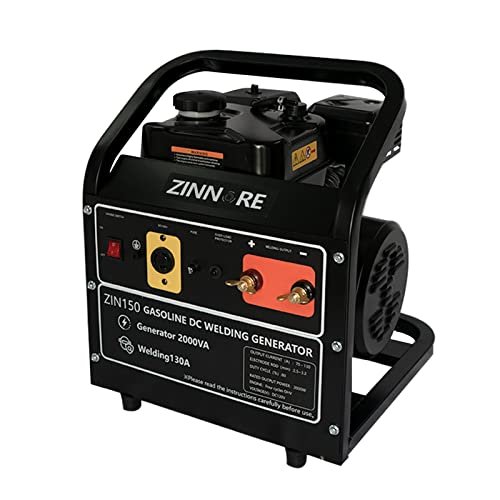
When your work takes you off the grid, where power outlets are a distant memory and deadlines are non-negotiable, a welder generator isn't just a convenience—it's your entire workshop in a single, robust package. But with so many options promising power and performance, how do you cut through the noise to find the right tool for the job? This comprehensive Welder Generator Buying Guide is designed to empower you with the knowledge to make an informed, confident purchase, ensuring you get a unit that's not just powerful, but perfectly suited to your specific needs.
Forget guesswork. We’re diving deep into the technical specs, real-world applications, and hidden pitfalls so you can choose a machine that delivers reliability, efficiency, and a consistently strong arc, no matter how remote your job site.
At a Glance: Your Welder Generator Checklist
Before you commit, here’s a quick rundown of the essential factors to weigh:
- Amperage & Rod Size: Match the machine's output to your typical welding tasks. Always leave a buffer.
- Auxiliary Power: Ensure enough wattage to run your essential tools simultaneously with welding.
- AC vs. DC: DC is the pro choice for smooth arcs and specialized metals; AC is for basic steel.
- Duty Cycle: How long can it weld? Professionals need 60%+, hobbyists might tolerate less.
- Fuel Type: Gasoline for portability and lower cost, Diesel for efficiency and continuous heavy use.
- Reliability: Reputable engine brands and robust build quality are non-negotiable.
- Compliance & Safety: Check local regulations, emissions standards, and safety certifications.
Why a Welder Generator? Unpacking the Dual-Purpose Powerhouse
Imagine you're miles from the nearest power line—deep in a farm field, high on a remote construction site, or responding to an emergency repair. You need to weld a broken implement, cut and join structural steel, or power a grinder and lights simultaneously. A standard welder won't cut it, and a separate generator adds bulk, complexity, and often, insufficient power for both tasks.
This is where the welder generator shines. It’s a marvel of engineering, combining a high-performance arc welder with a robust auxiliary power generator. This dual functionality is vital for situations where grid power is nonexistent or unreliable. It allows you to strike an arc for welding while concurrently powering your essential tools—from angle grinders and plasma cutters to work lights and even critical emergency appliances. It's truly a mobile power station for the serious professional or dedicated enthusiast. For those seeking to learn more about welder generators in general, this guide will provide a solid foundation.
Decoding the Powerhouse: Key Factors in Your Selection
Choosing the right welder generator boils down to understanding a few critical specifications and how they align with your operational demands. Let’s break them down.
1. The Core: Rod Diameter and Amperage
Your welding needs dictate the machine's power output. Think about the thickness of the materials you’ll be joining and the type of welding rods you typically use.
- Light Repairs: If you're tackling thin materials like fences, gate brackets, or sheet metal up to 4mm (approx. 5/32″) thick, you'll likely be using 3mm (1/8″) rods. This typically requires 80-90 Amps of power.
- Heavy Structural Welding: For beefier tasks—think I-beams, heavy machinery, or steel up to 10mm (approx. 3/8″) thick—you'll need 4mm (5/32″) rods, demanding a power output anywhere from 120-200 Amps.
Pro Tip for Power: Always select a machine that offers a comfortable power buffer. If your typical heaviest load is 180 Amps, opting for a 200A or 225A machine provides a crucial safety margin. This buffer ensures a smoother arc initiation, helps prevent the engine from stalling under load, and extends the life of your equipment. It’s also wise to consider choosing the right welding rods for specific projects, as this directly impacts your amperage needs.
2. Power Beyond the Arc: Auxiliary Output (kW)
A welder generator isn't just about welding. It's about powering your entire remote workshop. The auxiliary power output—measured in kilowatts (kW)—is what drives your grinders, drills, air compressors, and lights.
The Golden Rule: For a 200A class welder, you should aim for at least 5kW to 6kW of auxiliary power. This ensures you can run essential power tools effectively without compromising your welding capabilities.
Critical Insight: Don’t be fooled by headline specs alone. The amount of available generator power decreases as your welding amperage increases. Always consult the manufacturer’s "combined load chart." This chart will show you precisely how much auxiliary power remains available at various welding amperages. For MIG or flux-cored welding, add an extra 20% overhead to your generator load calculations. This accounts for potential voltage sags that can impact wire feeder performance. This is particularly important when powering remote sites where stable electricity is paramount.
3. The Current Debate: AC vs. DC Output
The type of current your welder generator produces profoundly impacts weld quality, ease of use, and the types of materials you can weld.
- AC (Alternating Current): You'll often find AC output on entry-level machines. It's suitable for basic stick welding on black steel, especially with certain types of electrodes (like E6011). However, AC arcs can be harder to start and maintain, and they tend to have more spatter. It's generally not ideal for critical, high-quality welds.
- DC (Direct Current): This is the professional’s choice. DC provides a significantly smoother, more stable arc, better penetration, and less spatter. It’s essential for welding stainless steel, cast iron, or when using specialized electrodes like E7018. For TIG welding, DC is a must, especially if the machine features high-frequency (HF) start, stable AC/DC switching (for aluminum), and ripple-free DC output (less than 5% VAC ripple). Also, check for an Open Circuit Voltage (OCV) of at least 75V DC for aluminum and 65V DC for steel, which aids in arc stability and starts.
| Feature | AC (Alternating Current) | DC (Direct Current) |
| :-------------------- | :------------------------------------------------------------- | :------------------------------------------------------------- |
| Arc Stability | More challenging to start and maintain | Smoother, more stable, easier to start |
| Penetration | Moderate | Deeper, more consistent |
| Spatter | Higher | Lower |
| Material Suitability | Basic black steel (e.g., E6011 electrodes) | Steel, stainless steel, cast iron, specialized alloys, TIG |
| Cost | Generally lower | Generally higher |
| Professional Use | Limited to specific applications | Preferred for most professional and critical welding |
4. The Grind of the Workday: Duty Cycle
Duty cycle is a critical metric that tells you how long a welder can continuously operate at its rated current within a 10-minute period before it needs to cool down. Ignoring duty cycle can lead to overheating, equipment damage, and frustrating downtime.
- Understanding the Spec: "60% @ 200A" means the machine can weld continuously for 6 minutes at 200 Amps, followed by 4 minutes of mandatory cooling.
- Recommendations:
- Hobbyist/Light Repair: If you’re just doing occasional, short bursts of welding, a 20-40% duty cycle might suffice.
- Professional/Pipeline Work: For sustained, heavy-duty applications common in construction or pipeline work, aim for machines with a 60% to 100% duty cycle. This minimizes interruptions and keeps productivity high.
Environmental Factor: Manufacturers typically rate duty cycles at 40°C (104°F). If you're working in extreme heat—like desert environments or tropical climates—you might need to derate the machine's capacity by 10-15% to prevent overheating. For sustained work, always prioritize a higher duty cycle over simply chasing the highest peak amperage number. You can find a deeper dive into duty cycle for welding machines here.
5. Fueling Your Fire: Gasoline vs. Diesel
The choice of fuel type impacts purchase price, running costs, maintenance, and overall performance.
- Gasoline Welders:
- Pros: Generally have a lower initial purchase price, are lighter, and more portable. They also tend to start easier in cold weather.
- Best For: Mobile service trucks, DIY enthusiasts, and short-term or intermittent projects.
- Considerations: Gasoline's volatility can limit storage options, and engines typically have a shorter lifespan compared to diesel.
- Diesel Welders:
- Pros: Offer superior fuel efficiency (meaning longer run times on a tank), much longer engine life, and higher torque, which translates to a more stable and consistent welding arc even under varying loads.
- Best For: Demanding applications like mining, large-scale construction sites, and situations requiring all-day continuous use.
- Considerations: Higher upfront cost, heavier, and generally require more specialized maintenance expertise. They also produce more particulate matter emissions.
| Feature | Gasoline Welders | Diesel Welders |
| :------------------ | :--------------------------------------------------------------- | :------------------------------------------------------------- |
| Purchase Price | Lower | Higher |
| Fuel Efficiency | Moderate | Excellent (lower operating costs for heavy use) |
| Engine Life | Shorter (typically 1,500-3,000 hours) | Longer (often 5,000-10,000+ hours) |
| Portability | Lighter, easier to move | Heavier, more robust |
| Arc Stability | Good, but can fluctuate more under heavy auxiliary load | Superior, more consistent, especially under combined load |
| Maintenance | Simpler, more common parts | More complex, often requires specialized expertise |
| Best Use | Intermittent work, mobile service, DIY | Heavy construction, mining, continuous industrial applications |
6. Built to Last: Reliability and Portability
A welder generator is a significant investment. You need a machine that can withstand the rigors of job site life and be moved effectively.
- Engine Brand: The engine is the heart of your unit. Stick to industry-recognized, reputable brands like Honda, Kohler, or Yanmar. These brands are known for their durability, performance, and, crucially, widespread availability of parts and service.
- Physical Protection: Look for units housed within a full roll cage. This robust frame provides essential protection against impacts, bumps, and accidental drops that are inevitable on busy construction sites.
- Mobility: Welder generators can be heavy beasts, often weighing 100kg (220 lbs) or more, with large diesel rigs easily exceeding 500kg (1,100 lbs).
- Wheel Kit: A sturdy, well-designed wheel kit is non-negotiable for smaller units. Consider pneumatic tires for rough terrain and solid rubber for puncture resistance on paved surfaces.
- Lifting Hook/Points: For heavier machines, integrated lifting hooks or forklift slots are essential for safe transport via cranes or heavy machinery.
- Ergonomics: Don't overlook handle design and balance for manual movement.
- Vehicle Fit: Always measure your service vehicle's cargo space, ramp angle, and garage door clearance to ensure the unit fits easily.
Beyond the Specs: Real-World Applications
Understanding how different industries utilize welder generators can help you pinpoint the right fit for your specific environment.
- Construction Sites: For erecting steel structures, installing rebar, or performing repairs where grid power is unavailable. These sites often demand high-amperage, high-duty-cycle units with robust auxiliary power for grinders, saws, and lights.
- Agriculture & Ranching: Farmers and ranchers frequently rely on these units for remote repairs on tractors, implements, fences, and gates. Portability, ease of starting, and versatility for various rod types are key here.
- Pipeline Maintenance: This is perhaps the most demanding application. It requires extremely high duty-cycle diesel machines, often with specialized arc characteristics for specific pipe welding processes. Units must be capable of long hours in harsh, isolated environments.
- Emergency Backup: A quality welder generator can double as a powerful backup generator during power outages, keeping essential appliances, lights, and even some HVAC systems running.
Keeping Your Powerhouse Running: Maintenance Essentials
Regular maintenance is the cornerstone of reliability and longevity for your welder generator. Neglect can lead to costly downtime and premature failure.
Daily Maintenance (After Every Use):
- Blow Out Dust: Use low-pressure compressed air to carefully blow out accumulated metal dust and debris from the cooling fins, engine, and electrical components. This prevents overheating and potential short circuits.
- Check Connections: Visually inspect all welding cables, ground clamps, and electrode holders for frays, damage, or loose connections. Loose connections generate heat, causing power loss and potential fire hazards.
- Clean the Stinger: Ensure your electrode holder (stinger) is clean and free of spatter. A clean stinger ensures good electrical conductivity for consistent arc starting.
- Visual Check: Quickly scan for any oil leaks, coolant leaks (if applicable), and ensure fuel levels are adequate for the next operation.
Periodic Maintenance:
- Engine Oil: The first oil change (break-in oil) is critical, usually after the first 20 hours of operation. After that, change the oil every 100 hours or as recommended by the engine manufacturer. In harsh conditions (dusty environments, high temperatures >85°F, or continuous heavy loads), halve this interval to every 50 hours. Always use engine oil specifically rated for diesel or gasoline generators, such as API CJ-4 or CK-4 diesel oil.
- Air Filters: Check the air filter regularly, especially in dusty conditions. A clogged air filter chokes the engine, reduces power output, increases fuel consumption, and can lead to black smoke emissions. Replace or clean as per the manufacturer's instructions.
- Electrical Inspection: Every six months or 500 hours, it's advisable to have a qualified professional inspect the generator’s brushes, slip rings, and electrical connections within the alternator housing. This helps preempt electrical issues before they cause failures. For more comprehensive guidance, review these essential generator maintenance tips.
Staying Safe & Compliant: Environmental & Regulatory Must-Knows
Operating a welder generator comes with significant responsibilities regarding safety, environmental impact, and regulatory compliance.
- Regulations: Ensure your chosen unit complies with relevant safety standards. In the U.S., these include OSHA regulations, ANSI Z49.1 for "Safety in Welding, Cutting, and Allied Processes," and CSA C22.2 No. 68 in Canada.
- Emissions: Engine emissions are a serious concern. In the U.S., engines manufactured after 2015 must comply with EPA Tier 4 Final emissions standards, which often necessitate advanced exhaust aftertreatment systems like Diesel Particulate Filters (DPF) or Selective Catalytic Reduction (SCR). Be aware of local regulations, which may vary.
- Certification: For peace of mind and insurance verification, look for units with UL 1585 or CSA C22.2 No. 68 certification specifically for "welding generator sets." This signifies independent testing and compliance with rigorous safety and performance standards.
- Environmental Factors:
- High Altitude (>5,000 ft): Naturally aspirated engines lose roughly 3% of their power output for every 1,000 feet of elevation gain. If you work at high altitudes, consider turbocharged or electronically controlled units, as they are better equipped to maintain power output.
- High Humidity/Salt Air: In coastal or high-humidity environments, look for features like conformal-coated circuit boards, stainless steel fasteners, and sealed alternator housings. These protect sensitive electronics from corrosion and moisture ingress.
- Dust-Heavy Environments: Mining or desert operations demand true IP54-rated enclosures to keep out dust and moisture. Ensure the unit has easily replaceable air filter elements with a high efficiency rating (e.g., >99.7% at 5 microns). Using a machine outside its certified environmental envelope is a primary cause of premature field failures.
Your Step-by-Step Path to the Perfect Welder Generator
Don't rush the purchase. A systematic approach will help you land the ideal machine for your needs.
- Document Your Welding Process: Start by making a clear list of your primary welding processes (e.g., Stick, MIG, TIG), the materials you typically work with, their thicknesses, and the types of electrodes (e.g., E6010 for root passes, E7018 for fill and cap) or shielding gases you require. This forms the baseline for amperage and current type. For specific TIG needs, ensure you understand the essentials of TIG welding beforehand.
- Calculate Combined Electrical Load: Think about all the tools you'll need to power simultaneously with welding. List each tool (grinder, air compressor, work lights, battery chargers, plasma cutter) and note its nameplate wattage. Add these up, then tack on an extra 15% to account for line loss, voltage drops, and startup surges for inductive loads. This total will dictate your required auxiliary power output.
- Define Mobility Constraints: A big machine might be powerful, but if you can't get it to the job site, it's useless. Measure the height of your truck bed, the maximum ramp slope you can manage, and any garage door clearances. Consider whether you need crane rigging points or dedicated forklift slots for heavier units.
- Review Local Compliance: Before finalizing, contact your state's OSHA office or the safety department of your primary project sites. Confirm all required certifications (UL, CSA, EPA), noise emission limits, and specific emissions protocols for your operational area. This step can prevent costly fines or project rejections.
- Request Field Test Data: A reputable manufacturer should be able to provide more than just brochure specs. Ask for verified duty cycle curves, actual fuel consumption logs from real-world tests, and thermal imaging reports. This data offers a transparent view of the machine's true performance under load.
Watch Out! Red Flags to Avoid When Buying
Not all welder generators are created equal. Some features or marketing claims can hide critical shortcomings. Be wary of these red flags:
- "Dual-voltage" generator output without isolated windings: While convenient, non-isolated windings can lead to voltage imbalances between outlets, potentially tripping breakers or even damaging sensitive tools. Professional-grade units will specify isolated windings for safety and stability.
- "All-position" welding capability without adjustable inductance control: While many machines can weld in multiple positions, achieving consistent, high-quality "all-position" welds (especially with challenging electrodes) often requires fine-tuning the arc's characteristics. Without adjustable inductance control, you might experience poor puddle control and excessive spatter.
- "Cold weather package" that only includes a block heater: A true cold-weather readiness package goes far beyond a simple block heater. It should include features like pre-lubricated bearings, synthetic-grade engine oil (rated for extreme lows), and alternator windings specifically rated for temperatures down to -40°C (-40°F) to ensure reliable starts and operation in frigid conditions.
- Generator output rated in "surge watts" instead of "running watts": "Surge watts" is a peak, momentary output, often used in consumer-grade generators. Professional-grade welder generators should always specify their continuous or "running watts" for auxiliary power, as this reflects the usable power you can depend on.
- Ignoring the nuances of inverter technology: Inverter-based welder generators offer fantastic benefits—they're often 30-50% lighter, 18-25% more fuel-efficient, and provide incredibly fine arc control. However, they are also more sensitive to dirty fuel and voltage spikes. If you choose an inverter unit, ensure you use clean fuel and pair it with a transient voltage suppressor (TVSS) rated for at least 6 kA to protect its sophisticated electronics.
Making Your Final Decision: Confidence in Every Arc
Selecting a welder generator is more than just picking a tool; it's choosing a partner for your most demanding work. By methodically evaluating your needs against the key factors—amperage, auxiliary power, current type, duty cycle, fuel, and reliability—and keeping an eye out for potential pitfalls, you'll be well-equipped to make a decision that pays dividends in productivity, safety, and peace of mind. Invest wisely, and your welder generator will be a tireless workhorse, empowering you to tackle any job, anywhere.