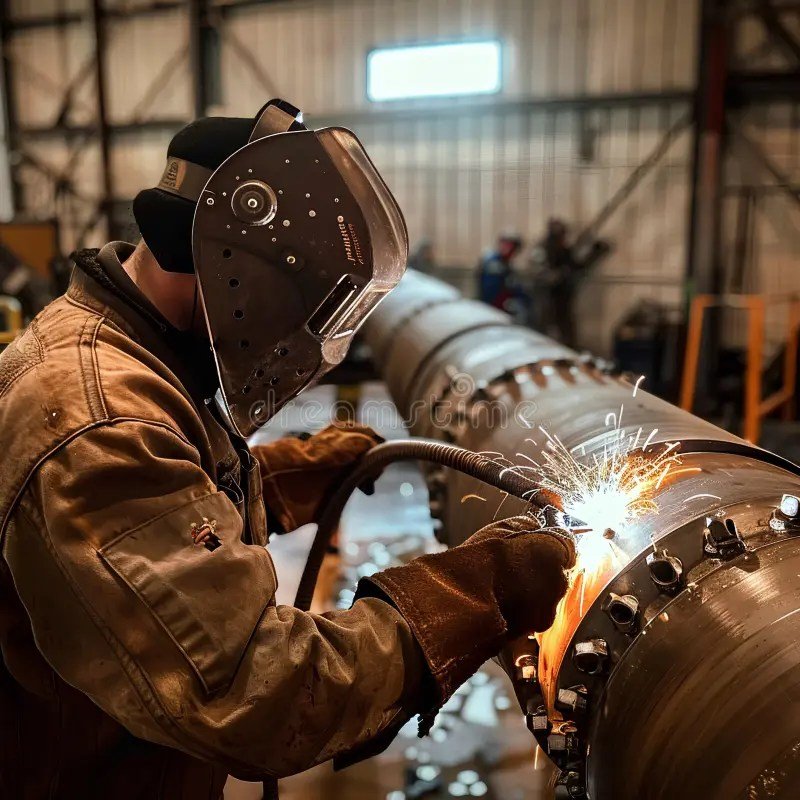
Welding on the go offers incredible flexibility, but there's a critical catch: the source of your power. Running a welder off a generator, while convenient for remote work or job sites lacking grid power, demands a nuanced understanding of electrical compatibility. Fail to grasp the intricacies of Safety & Operation of Welder Generators, and you risk not only shoddy welds but also significant damage to your equipment and, critically, serious safety hazards like electrical fires or injury. This isn't just about plugging in; it's about a delicate dance of power matching, where precision ensures both peak performance and paramount safety.
At a Glance: Powering Your Welder Safely
- Match Power Precisely: Always ensure your generator's output (wattage, amperage, voltage) exceeds your welder's peak demand by at least 30%.
- Clean Power is Key: Inverter welders, especially, require stable, "clean" power to prevent damage and ensure consistent welds.
- Protect Your Gear: Look for generators with built-in voltage regulation, circuit breakers, and GFCI outlets.
- Ground Everything: Proper grounding of both the generator and welder is non-negotiable for safety.
- Use the Right Connections: Employ dedicated, correctly gauged cables and appropriate plugs/outlets.
- Maintain Regularly: A well-maintained generator running on clean fuel is a safer, more reliable power source.
The Crucial Connection: Why Power Consistency Matters
Imagine trying to build a finely tuned engine with tools that constantly flicker between full power and a faint sputter. That's essentially what happens when a welder, particularly a sensitive inverter model, receives inconsistent or "dirty" power from a generator. Welders, by their very nature, require a stable, uninterrupted electrical current to maintain a steady arc and produce strong, consistent welds.
Generator power, if not carefully matched and maintained, can be a major culprit in what's known as "dirty power." This isn't literal grime, but rather electrical irregularities: sudden spikes, significant voltage drops, or incorrect frequency. For your welder, these fluctuations are more than just an inconvenience; they're an assault. They can lead to:
- Weak, inconsistent welds: The arc struggles, resulting in brittle or porous connections that compromise structural integrity.
- Structural damage to the welder: Sensitive internal components can overheat, short out, or suffer cumulative stress damage.
- Electrical fires: Overloaded circuits, damaged insulation, and overheating are direct pathways to fire hazards.
Inverter welders, lauded for their efficiency, compact size, and precise arc control, are particularly vulnerable. These sophisticated machines convert AC power to DC, then back to a finely tuned AC or DC output for welding. This process demands a constant, buttery-smooth input. Sporadic power fluctuations from a poorly chosen or maintained generator can cause: - Arc instability: Leading to frustrating stops and starts, making quality welds nearly impossible.
- Welder shutdowns: The machine's internal protection systems might trip, halting your work.
- Costly damage: Repeated exposure to power surges or sags can fry circuit boards, necessitating expensive repairs or even replacement.
- Overheating: An unstable arc can force the welder to work harder, generating excessive heat and posing a serious injury risk.
- Poor weld quality: Warping, lack of fusion, and other defects can turn valuable material into scrap.
This isn't to say you can't run an inverter welder off a generator – far from it. It simply means you must be exceptionally diligent in selecting the right generator for the job.
Power Matching: The Golden Rule for Safe Operation
The heart of safe and effective welder generator operation lies in one principle: impeccable power matching. It's about ensuring your generator doesn't just "turn on" your welder, but truly powers it with stability and resilience.
Generator Size & Capacity: More Than Just "Enough"
This is perhaps the most critical factor. Your generator must be robust enough to handle not only your welder's continuous running wattage but also its momentary, higher start-up wattage or peak demand. Welders, especially when striking an arc, can draw significant surges of power.
Most welders will require at least 150 amps or more, translating to a minimum of 4,000 watts. But for many applications, you'll need significantly more. For example, a stick welder can demand anywhere from 5,600 to 26,000 watts (operating at 40-200 amps and 90-220V).
Recommended Generator Sizes for Stick Welders:
| Welder Wattage | Minimum Generator Wattage |
|---|---|
| Below 5,600 Watts | Below 7,000 Watts |
| 5,600 - 10,000 Watts | 7,000 - 13,000 Watts |
| 10,000 - 26,000 Watts | 13,000 - 33,000 Watts |
| The 30% Buffer Rule: Don't just meet the minimum. It's incredibly wise to choose a generator with at least 30% higher capacity than your welder's maximum load. This crucial buffer accounts for those peak demands, unexpected surges, and ensures the generator isn't constantly running at its absolute limit, which extends its lifespan and provides cleaner power. Overloading a generator significantly shortens its life and can cause power fluctuations detrimental to your welder. |
Voltage Protection & Output: A Shield Against Surges
Your generator's output voltage must precisely match your welder's input voltage requirements. This isn't a suggestion; it's an imperative. Mismatched voltages are a direct route to fried electronics.
Beyond simple matching, look for generators equipped with robust input voltage protection. This includes features like:
- Circuit breakers: Your first line of defense against overloads, automatically cutting power if the demand becomes too high.
- Relays: Electrically operated switches that can quickly isolate circuits during fault conditions.
- Fuses: Sacrificial components that melt and break a circuit when current exceeds a safe level, protecting more expensive components.
- Low-voltage protection switch: This specific breaker safeguards against unexpected power surges or dips, which can be equally damaging.
These protective elements ensure your welder can't draw too much power, preventing both welder damage and generator overload.
Clean Fuel & Consistent Maintenance: The Lifeblood of Reliability
A generator is only as good as its fuel and its upkeep. Running on dirty or stale fuel can clog lines, damage internal components, reduce power output, and even lead to dangerous explosions. Always use fresh, clean fuel and check your fuel levels regularly.
Beyond fuel, diligent maintenance is non-negotiable. Regularly check oil levels, air filters, and spark plugs. Ensure all connections are tight and free of corrosion. A poorly maintained generator is a ticking time bomb for power inconsistencies and mechanical failure. For long-term reliability and safety, understanding essential generator maintenance is paramount.
Grounding & Stability: Your Safety Anchor
Electricity demands respect, and proper grounding is a cornerstone of electrical safety. Both your generator and all connected electrical equipment, including your welder, must be properly grounded. This provides a safe path for fault currents, preventing electrocution hazards.
Furthermore, always place your generator on a stable, level surface. An unstable generator can tip, damage itself, or create hazardous conditions. Ensure it's in a well-ventilated area, away from combustible materials, to prevent carbon monoxide buildup and fire risks. Learn more about grounding electrical equipment safely to ensure you're always protected.
Plugs, Outlets & Cables: The Right Connections Matter
It might seem obvious, but using the correct plugs, outlets, and cables is crucial. Your generator must have the appropriate outlets that match your welder's plug specifications (e.g., 240V twist-lock, specific amperage ratings). Adapters should be avoided if possible, but if necessary, ensure they are heavy-duty and rated for the full current draw.
Connect your welder to the generator using a dedicated power cable of the correct type and gauge. This ensures an uninterrupted power supply without voltage drop. Avoid excessively long extension cords, as they introduce resistance, decrease voltage at the welder, and can cause overheating in the cable itself. When you're dealing with high-amperage welding, selecting the proper welding cables becomes a critical consideration for both performance and safety.
GFCI Outlet: An Extra Layer of Protection
A Ground Fault Circuit Interrupter (GFCI) outlet is a crucial safety feature on any generator you intend to use for welding. This device monitors the balance of electrical current flowing through a circuit. If it detects an imbalance – indicating a ground fault (where current is flowing along an unintended path, like through a person) or an overload – it will instantly shut off power. This rapid response can prevent severe electrical shock and minimize fire risk.
Certification & Manufacturer Guidelines: Trustworthy Sources
Always choose a generator that is UL (Underwriters Laboratory) certified. This certification indicates that the product has met stringent safety and quality standards. Most importantly, always follow the manufacturer’s instructions for both your welder and your generator. These manuals contain vital information on operation, maintenance, and safety specific to your equipment. Don't guess; read the manual.
Choosing the Right Companions: Welders & Generators for the Job
Not all welders are created equal when it comes to generator compatibility, and the same goes for generators themselves. Understanding their strengths and weaknesses helps you pair them effectively.
Welder Types Suitable for Generators:
- Stick Welder (SMAW): Often considered the most generator-friendly welder. Stick welders are rugged, forgiving of minor power inconsistencies, and excellent for outdoor or rough conditions. Their relative tolerance for power variability makes them a strong choice when generator power is the primary source.
- Flux-cored Welder (FCAW): Highly suitable for generator use, especially for outdoor fabrication. Flux-cored welders are versatile and don't require external shielding gas, which is a major advantage when mobile.
- MIG Welder (GMAW): Suitable, but requires adequate generator capacity and, crucially, consistent power. The continuous wire feed and gas shielding of a MIG welder benefit greatly from a stable arc.
- TIG Welder (GTAW): Requires a very stable and clean power supply due to its sensitivity to fluctuations, especially for precise, high-quality welds. If you're TIG welding off a generator, an inverter generator is almost a necessity.
- Plasma Cutter: These machines have high power demands, so a high-capacity generator is essential. Power consistency is also important to ensure clean, efficient cuts.
To make the best pairing decisions, it's helpful to have a solid grasp on understanding different welder types and their specific power needs.
Types of Generators Commonly Used for Welding:
The generator you choose dictates the quality and stability of your power supply.
- Engine-Driven Generators (Conventional): These are the workhorses of mobile power, commonly running on various fuels.
- Petrol (Gasoline): Widely available and generally cost-effective to purchase. However, petrol is highly flammable, requires regular maintenance, and generally produces "dirtier" power than inverter types.
- Diesel: Known for their longevity, fuel efficiency, and ability to handle heavy-duty, continuous use. Diesel generators are more expensive initially and heavier, but they are often the choice for professional, high-demand applications.
- Gas (LPG - Liquid Propane Gas): Offer lower emissions and quieter operation compared to petrol or diesel. Gas availability can sometimes be an issue, and they may have slightly lower power output than equivalent petrol models.
- Inverter Generators: These are the gold standard for powering sensitive electronics, including most modern welders. They convert raw AC power to DC, then back to a much cleaner, stable AC waveform.
- Pros: Provide stable, consistent output ideal for delicate welding tasks (especially TIG and inverter welders). They are typically lighter, quieter, and more fuel-efficient than conventional generators.
- Cons: Generally more expensive than conventional generators of similar power output. Their refined power delivery makes them invaluable, particularly for those who want to experience the advantages of inverter welders first-hand.
- Battery-Powered Generators (Portable Power Stations): A newer player in the field, gaining traction for specific use cases.
- Pros: Silent operation, zero emissions, making them suitable for indoor use or environmentally sensitive areas. Require no fuel storage.
- Cons: Currently have limited power output compared to engine-driven and inverter types, making them best suited for smaller welding tasks or short bursts of power. Recharge times can be lengthy, and initial cost can be high.
For serious welding applications where portability and power consistency are key, a robust inverter generator often provides the best balance of performance and protection for your welder. To dive deeper into selecting the ideal unit for your mobile welding needs, Explore welder generators and their diverse capabilities.
Step-by-Step: Connecting Your Welder to a Generator Safely
Getting your mobile welding setup running isn't complicated, but each step must be performed with careful attention to safety and proper procedure.
- Pick the Proper Generator (and Welder): Before you even think about cables, confirm your generator’s wattage, voltage, and amperage output are not just compatible, but exceed your welder’s requirements, ideally by that 30% buffer we discussed. Double-check the electrical requirements listed on both units.
- Prepare the Generator:
- Ensure the generator is on a stable, level surface, in a well-ventilated area, and away from any combustible materials.
- Check oil and fuel levels. Use fresh, clean fuel.
- Crucially, ensure the generator is properly grounded. Connect its grounding terminal to a suitable ground rod or approved grounding system.
- Ensure all circuit breakers on the generator are in the "OFF" position.
- Prepare the Welder:
- Ensure your welder is also placed on a stable surface.
- Confirm all welder settings are in the "OFF" position.
- If your welder requires grounding itself, ensure that is also properly established.
- Make the Connection:
- With both machines powered OFF, carefully plug your welder's power cable into the appropriate outlet on the generator. Ensure the plug fits securely and is fully seated. Remember to use a dedicated, correctly gauged power cable – no flimsy extension cords!
- Test the Setup:
- Start your generator according to its manufacturer's instructions. Allow it to run for a minute or two to stabilize its output.
- Once the generator is running smoothly, flip on the main power switch on your welder.
- Monitor: Listen for any unusual noises, watch for flickering lights on the welder, or observe any strain on the generator. If your generator has a voltage or amperage meter, keep an eye on these to ensure they are within safe operating parameters and stable.
- Perform a test weld on scrap metal. Observe the arc stability and weld quality. If anything seems off (weak arc, surging, frequent shutdowns), power down immediately and troubleshoot.
Addressing Common Concerns & Misconceptions
When combining these powerful tools, questions are bound to arise. Here are answers to some frequent queries:
Q: Can I use any extension cord to connect my welder to my generator?
A: Absolutely not. You must use a heavy-duty, appropriately gauged power cable specifically rated for the amperage and voltage your welder will draw. Standard household extension cords will overheat, cause voltage drops, and pose a severe fire hazard.
Q: My generator has a lower wattage output than my welder's maximum, but I only weld occasionally. Is that okay?
A: No, it's not. Even occasional use at maximum draw on an undersized generator can damage both machines. The initial arc strike can demand significantly more power than the running wattage. Always oversize your generator for safety and longevity.
Q: What's the biggest risk if I don't properly size my generator?
A: The biggest risks are damaging your expensive welder due to insufficient or "dirty" power, potentially starting an electrical fire, or suffering personal injury due to overloaded circuits or equipment failure. Under-sizing also drastically shortens the lifespan of your generator itself.
Q: Do I really need a GFCI outlet on my generator?
A: Yes. A GFCI outlet is a critical safety feature that can prevent serious electrical shock or electrocution in the event of a ground fault. It's a non-negotiable for safety when operating electrical tools in potentially damp or outdoor environments.
Q: My generator runs, but my welder acts sluggish or trips frequently. What's wrong?
A: This is a classic symptom of an undersized generator or one delivering "dirty" power. It could also indicate a loose connection, an improperly gauged power cable, or a generator in need of maintenance (e.g., dirty fuel, old spark plug). Check your generator's output specifications against your welder's requirements first, then inspect all connections and maintenance records.
Your Next Steps for Powering Up Safely
Operating a welder off a generator opens up a world of mobile welding possibilities, but it's a privilege that comes with significant responsibility. The difference between a successful project and a costly, dangerous mishap often boils down to careful planning and a steadfast commitment to safety.
Before your next mobile welding job, take the time to:
- Re-evaluate your current setup: Does your generator truly meet or exceed your welder's power demands by that crucial 30% buffer?
- Inspect your connections: Are your cables appropriately gauged, and are all plugs and outlets secure and undamaged?
- Confirm your safety protocols: Is your grounding secure? Does your generator have GFCI protection and working circuit breakers?
- Prioritize generator maintenance: A clean, well-serviced generator is a reliable and safe power source.
If you're ever unsure about any aspect of your setup, whether it's power calculations or connection methods, consult with a qualified electrician or welding professional. Their expertise can save you from costly mistakes and, more importantly, keep you safe. Invest in the right equipment, understand its limitations, and empower your mobile welding operations with confidence and unmatched safety.