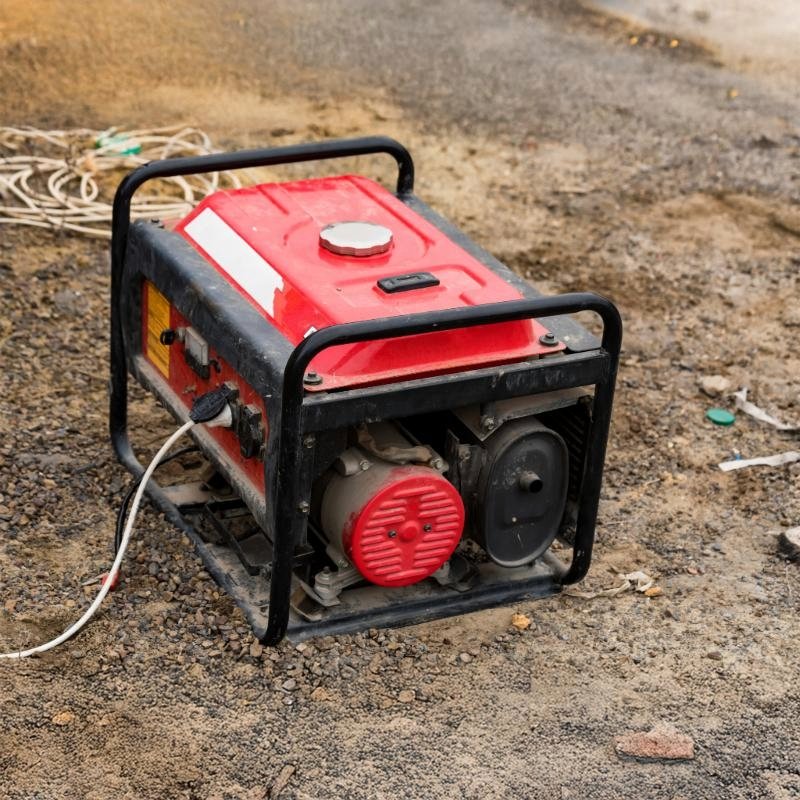
When you're out in the field, far from a reliable power outlet, the last thing you want is a dead arc or tools that won't run. That's precisely why engine-driven machines are indispensable for any serious welder tackling repair work, pipeline projects, or remote construction. This detailed Comparison & Reviews of Welder Generator Models for Portable Power cuts through the noise, helping you understand which integrated unit truly delivers, transforming your work from power-dependent to completely portable. These ingenious machines combine the robust power of a generator with the precision of a welder, eliminating the need to haul separate, cumbersome equipment and ensuring you always have the juice for both your torch and your tools.
At a Glance: Your Welder Generator Quick Guide
- Versatility is King: Engine-driven welder generators are your mobile workshop, powering everything from arc welding to lights and angle grinders, especially when grid power is a distant dream.
- Purpose-Built Power: Unlike standard generators, these combos deliver "clean" power specifically optimized for consistent, smooth arc welding.
- Cost vs. Capability: While the initial investment is higher, their all-in-one functionality often justifies the price tag for contractors and field workers.
- Amps & Duty Cycle: Expect engine-driven units to range up to 225 amps with duty cycles up to 60%, ideal for most field applications, but less than fixed-station industrial welders.
- Independent Output Matters: Advanced models offer separate power outputs for welding and auxiliary tools, preventing one from affecting the other's performance.
Why You Need a Welder Generator: Powering Your Fieldwork
Imagine being on a remote job site – a broken fence line, a pipeline repair in the middle of nowhere, or a construction project just getting off the ground. A standard plug-in welder is useless without an outlet, and hauling a separate generator and a welder is a logistical headache. This is where welder generators shine. They are purpose-built powerhouses, integrating a high-performance welder directly into a robust generator, giving you complete freedom to weld, grind, cut, and power lights or other equipment wherever your work takes you.
For professionals whose work keeps them on the move, particularly if over 70% of your welding happens away from a utility connection, a dedicated engine-driven welder generator isn't just a convenience – it's a necessity. It’s the ultimate portable solution, ensuring your productivity never falters due to a lack of power. If you're looking for an even deeper dive into the world of these versatile machines, our Comprehensive guide to welder generators covers everything from foundational principles to advanced applications.
Key Considerations for Choosing Your Portable Powerhouse
Selecting the right welder generator isn't just about picking the biggest or cheapest model. It's about matching the machine's capabilities to your specific needs. Here's what you should weigh carefully:
Versatility: More Than Just Welding
Beyond their primary welding function, these units are incredibly versatile. They can power a wide array of tools – drills, grinders, saws – and provide illumination for evening work. Some cutting-edge models, like the Miller Fusion, even offer the flexibility to operate from utility power when it's available, giving you the best of both worlds. This adaptability is paramount for contractors who face diverse job requirements daily.
Welding Power: Amps, Thickness, and Duty Cycle
When it comes to welding capability, traditional plug-in welders often boast higher amperages (500+ amps) and 100% duty cycles, thanks to the stable, virtually limitless grid power. This makes them ideal for extremely thick materials or continuous, heavy fabrication.
Engine-driven welders, by contrast, typically range up to 225 amps, with duty cycles up to 60%. While this might sound less powerful, it's more than sufficient for the vast majority of fieldwork, allowing you to handle materials up to 3/8" or even thicker steel, depending on the model and process. Understanding how welding duty cycle impacts performance is crucial here, as it dictates how long you can weld continuously before the machine needs to cool down.
Welding Performance: The "Clean" Power Advantage
Not all power is created equal, especially for welding. Modern engine-driven welders, such as the ESAB Ruffian, feature independent auxiliary generator output voltage. What does this mean for you? It ensures smooth and consistent welding performance, even if you're simultaneously running other power-hungry tools like grinders or air compressors. This "clean" power is essential for stable arcs and quality welds, preventing frustrating fluctuations that can compromise your work.
Costs: An Investment in Independence
Yes, welder generators carry a higher initial price tag than standalone welders or basic generators. However, their unparalleled versatility, combining two essential pieces of equipment into one highly mobile package, often makes them a wise, long-term investment. For professional contractors, the ability to take on any job, anywhere, quickly offsets the upfront cost through increased efficiency and expanded service offerings.
Combo vs. Regular Generators: Why Specificity Matters
You might wonder if a high-output regular generator could suffice. While a standard generator can power some tools, its output might not be "clean" enough or stable enough for consistent, high-quality arc welding. Welder generator combos are engineered to provide precise, steady current delivery crucial for smooth arc characteristics. Even if a regular generator offers higher overall power (>10 kW), its general-purpose output could lead to frustratingly inconsistent welds. If welding is a core part of your mobile work, the specialized design of a welder generator is indispensable.
Top Welder Generator Models: A Deep Dive for 2025/2024
Let's break down some of the leading models currently dominating the market, offering a clear picture of their strengths and ideal applications.
1. Lincoln Electric Eagle 10.000 Plus
The Lincoln Electric Eagle 10.000 Plus is a robust and reliable workhorse, perfect for heavy-duty fieldwork and powering a small job site.
- Power Output: Generates a substantial 9,000 Watts continuous and 10,500 Watts surge power, ample for most tools and lights.
- Engine & Fuel: Equipped with a powerful 23 HP Kohler Gasoline Engine. Its large 12-gallon fuel tank allows for extended operation, consuming approximately 1.5 gallons/hour at 210 amps DC.
- Weight: At 514 lbs, it’s on the heavier side, indicating its sturdy build and stationary field use more than constant repositioning.
- Welding Capabilities: Primarily designed for Stick welding, it's highly versatile and can become a multi-process machine by simply plugging in external MIG or TIG welders.
- Auxiliary Output: Features a single 120V/240V full-KVA receptacle (38 amps) and two 120V duplex receptacles (40 amps), offering flexible power options for various tools.
- Notable Features: Comes with a fully enclosed case, keeping noise levels to a respectable 76 dB. A truck mounting kit is available for secure transport, and an LED hour meter helps track maintenance. Oil changes are recommended every 100 hours, filters every 200 hours.
- Starting: Offers both recoil and electric push-button starting.
2. Hobart Champion 145 Arc
A compact and surprisingly capable unit, the Hobart Champion 145 Arc is an excellent choice for smaller projects or for welders needing solid performance in a lighter package.
- Power Output: Delivers 4,000 Watts continuous and 4,500 Watts surge, enough for basic power tools and lighting.
- Engine & Fuel: Powered by a Briggs & Stratton 305 cc, 10 HP 4-cycle OHV engine, paired with a 6.25-gallon fuel tank.
- Weight: A manageable 222 lbs, making it one of the more portable options.
- Welding Capabilities: Features a built-in stick welder with 145 amps, capable of welding up to 1/4″ thick metal using electrodes up to 3/32″. Its duty cycle is 30% at 130 amps.
- Auxiliary Output: Includes a built-in 20 Amp, 240V AC outlet and four 20 Amp, 120V AC GFCI outlets, providing good versatility for power tools.
- Notable Features: Running gear is included, enhancing its portability. The electrical components are proudly made by Miller, ensuring quality. You can even add fuel while the engine is running, a convenient feature for continuous work.
3. Klutch 7500K Arc Welder/Generator
The Klutch 7500K stands out as an affordable yet robust option, perfect for those seeking solid performance without breaking the bank.
- Power Output: Provides 6,000 Watts continuous and 6,600 Watts surge power, sufficient for most medium-duty tasks.
- Engine & Fuel: Equipped with a 4-cycle, 14 HP Kohler engine and a 5-gallon fuel tank, offering up to 8 hours of run time.
- Weight: At 220 lbs, it's designed with portability in mind.
- Welding Capabilities: Features a built-in stick welder with an adjustable range of 60–170 amps, capable of welding up to 3/8in. thick steel.
- Auxiliary Output: Offers four 115V, 20 Amp receptacles and one 240V, 30 Amp twist lock receptacle, providing versatile power connections.
- Notable Features: Comes with an integrated wheel barrel-style cart for easy transport. Klutch backs the welder with a 3-year warranty, and the Kohler engine carries a 2-year warranty, adding peace of mind to your investment.
4. Miller Fusion 160 Generator Welder
The Miller Fusion 160 is a testament to innovation, boasting "Power Shift" technology that makes it incredibly adaptable.
- Power Output: Delivers 6,200 W continuous and 6,500 W surge, making it a reliable power source.
- Engine & Fuel: Powered by a 13.4 HP Kohler engine, operating at 3,750 RPM and idling at 2,500 RPM. Its 6.25-gallon fuel tank provides approximately 7.5 hours of run time at a 3,000-watt continuous load, or 8.2 hours welding at 160 amps (20% duty cycle).
- Weight: A very manageable 242 lbs, enhancing its portability.
- Welding Capabilities: Features a 160-amp rated inverter stick welder, known for its smooth arc.
- Notable Features: Its standout "Power Shift" technology allows it to run off either its internal generator or from 120/240V utility power, offering unmatched flexibility. Using Kohler PRO 10W-50 oil can triple the oil change interval to an impressive 300 hours. It maintains auxiliary voltage within 10% of 120/240V, ensuring stable power for tools.
5. ESAB Ruffian 150 DC Manual Metal Arc Welder and AC Generator
The ESAB Ruffian 150 is built for durability and consistent performance in demanding environments.
- Power Output: Provides 4,000 watts continuous and 4,500 watts peak auxiliary power.
- Engine & Fuel: Features a robust 14-HP KOHLER® Command PRO engine. The 5-gallon fuel tank offers a solid 6.5 hours of run time.
- Weight: Weighs in at 236 lbs, a good balance of durability and relative portability.
- Welding Capabilities: Boasts a built-in DC stick welding capability with 150A at a 60% duty cycle. It features adjustable arc force control, allowing it to burn electrodes up to 5/32-in. diameter with ease.
- Auxiliary Output: Includes four 120V receptacles and one 240V receptacle. Crucially, its auxiliary output voltage is independent of the welding current, ensuring stable power for your tools while you weld.
- Notable Features: Comes with running gear and handles for easy movement, and its rigid frame supports truck mounting for secure transport.
6. TOMAHAWK 15 HP Engine Driven Portable Generator Welder (TWG210A)
The TOMAHAWK TWG210A is a lightweight yet powerful contender, emphasizing smooth welding and ease of transport.
- Power Output: Offers 2000 W continuous generator capability, but compensates with a high 210 A welding output.
- Engine & Fuel: Equipped with a 15 HP Tomahawk power inverter engine. Its large 7-gallon fuel tank is designed for uninterrupted, whole-day operation.
- Weight: At 202 lbs, it's one of the lightest models in its class, enhancing portability.
- Welding Capabilities: Impressively handles both Stick and TIG welding, and includes both a stick electrode holder and a TIG welding torch. The inverter generator technology provides very clean power, resulting in exceptionally smooth welds. Offers a 60% duty cycle.
- Auxiliary Output: Features two 120V receptacles, but notably lacks 240V receptacles.
- Notable Features: Known for its durable, rugged construction. Comes with large 8″ never-flat wheels for easy maneuverability, an electric start function, and inverter generator technology for very steady sine waves, which is excellent for sensitive electronics and welding.
7. Lincoln Ranger Engine Welder Generator K3459-1 (Ranger 330MPX)
The Lincoln Ranger 330MPX represents the pinnacle of modern welder generator design, focusing on user experience and efficiency.
- Noise Level: A significant advantage, boasting up to 60% quieter operation compared to many competitors, making it more pleasant for both the operator and surrounding environment.
- Size & Weight: Features a smaller footprint and is up to 25% lighter than comparable models, enhancing its portability and ease of storage on a truck.
- Welding & Generator Performance: While specific amperage and power output are not detailed in the provided ground truth, it's designed for professional-grade welding and power generation.
- Notable Features: Equipped with a digital user interface, which greatly enhances weld quality and productivity by providing precise control and feedback. This level of digital control is a major step forward for field welding.
8. Multiquip GAW180HEA
The Multiquip GAW180HEA is a robust, commercial-grade unit known for its durable engine and advanced inverter technology.
- Power Output: Delivers 180 amps for welding and 3,000 peak watts of auxiliary power.
- Engine & Fuel: Features a commercial-grade 4-stroke Honda GX-340 engine (10.7 horsepower) known for reliability. It has a 3.7-gallon fuel tank.
- Weight: Weighs 246 lbs, a solid build for steady performance.
- Starting: Offers both automatic electric start and recoil start for reliability.
- Welding Processes: Highly versatile, supporting SMAW (Stick), FCAW (Flux-Cored), GTAW (TIG), and ACAC (Air Carbon Arc Cutting), making it suitable for a wide range of tasks.
- Notable Features: Comes in an open-frame design. Features a permanent magnet alternator and inverter technology for very clean AC/DC output, which is ideal for precise welding and sensitive electronics. Includes arc force control for fine-tuning your welding arc. However, it does not include portability features as standard, so a separate cart or mounting solution would be needed.
9. Hobart Champion Elite
The Hobart Champion Elite is a powerful, heavy-duty option designed for demanding applications and prolonged use.
- Engine & Fuel: Powered by a robust 23-horsepower Kohler engine and features a large 12-gallon fuel tank for extended run times, minimizing refueling interruptions.
- Weight: Weighs approximately 500 pounds, making it a substantial unit for stationary work or truck mounting.
- Welding Capabilities: Primarily designed for stick welding, but can be easily set up for TIG and flux-cored welding, offering good versatility for different processes. It boasts an impressive 100% duty cycle at 225 amps, meaning it can weld continuously at high amperage without overheating.
- Auxiliary Output: Equipped with four GFCI-backed 120-volt AC outlets and two 50-amp outlets, providing significant power for various tools and equipment.
- Notable Features: Includes a three-position range switch and an adjustment knob for precise control over welding parameters.
- Starting: Features electric start only.
- Portability: An optional wheel kit is available to add mobility to this heavy unit.
Choosing Your Welder Generator: What Matters Most?
With so many excellent options, how do you pinpoint the best fit for your garage or job site? Consider these decision criteria:
1. Amperage and Material Thickness
Match the welder's maximum amperage to the thickness of the materials you'll be primarily working with. Higher amps mean you can weld thicker metal. For most field repairs and fabrication up to 3/8", a 150-200 amp machine is typically sufficient. If you’re often dealing with heavy structural steel, you might need to lean towards the higher end or consider units that can accommodate external welders for higher amperage processes.
2. Duty Cycle: Work Longer, Wait Less
Duty cycle is critical, especially for professional use. It tells you how many minutes out of a 10-minute period a welder can operate at its maximum amperage before needing to cool down. A 60% duty cycle at 150 amps means you can weld for 6 minutes continuously at 150 amps, then it needs 4 minutes to cool. For sustained, heavy work, aim for a higher duty cycle.
3. Engine Type and Fuel Efficiency
Gasoline engines are common, but look at the HP, brand (Kohler, Briggs & Stratton, Honda are reputable), and fuel tank size. A larger tank means fewer refueling stops, which is a huge benefit on remote sites. Consider the fuel consumption rate – even a small difference can add up over extended periods.
4. Auxiliary Power Output: Beyond the Arc
Assess the generator's continuous and surge wattage. Do you need to run grinders, saws, air compressors, or even power an entire small worksite? Check the number and type of receptacles (120V, 240V, twist-lock) to ensure compatibility with your existing tools. Remember that "clean" power output, independent of welding current, is a significant advantage for overall job site efficiency.
5. Portability and Weight
If you're constantly moving the unit around your property or hauling it in and out of a truck, weight and included running gear are paramount. Lighter units (like the TOMAHAWK or Klutch) with built-in wheels or a wheelbarrow-style cart offer immense convenience. For heavier units (like the Lincoln Eagle or Hobart Champion Elite), consider a truck mounting kit or an optional wheel kit if frequent movement is required.
6. Welding Processes Supported
Most welder generators come with built-in Stick (SMAW) capabilities, which is excellent for outdoor, windy conditions. Some, like the Multiquip GAW180HEA or TOMAHAWK, also support TIG (GTAW) or Flux-Cored (FCAW) welding. If you need MIG (GMAW), you might need a machine that can power an external MIG welder, as dedicated built-in MIG capabilities are less common in these integrated units. When you’re ready to start, remember selecting the right electrodes for your project is just as important as the welder itself.
Keeping Your Welder Generator Running: Maintenance & Longevity
Your welder generator is a significant investment, and proper care will ensure it serves you reliably for years. Regular maintenance isn't just about preventing breakdowns; it’s about maintaining peak performance, especially the sensitive electrical components that contribute to arc stability.
- Oil Changes: Follow manufacturer recommendations (e.g., every 100 hours for Lincoln Eagle, up to 300 hours with special oil for Miller Fusion).
- Air Filters: Clean or replace regularly, especially in dusty environments. Dirty filters choke the engine and reduce efficiency.
- Spark Plugs: Check and replace as needed for optimal engine performance.
- Fuel System: Use fresh fuel. If storing for extended periods, add a fuel stabilizer or drain the tank to prevent carburetor issues.
- Battery: For electric start models, ensure the battery is charged and terminals are clean.
- General Cleanliness: Keep the unit free of dirt, debris, and welding spatter. This helps with cooling and prevents electrical issues.
By adhering to best practices for generator maintenance, you'll protect your investment and keep your power flowing smoothly.
Common Questions About Welder Generators
Can I weld with any generator?
No. While some high-output conventional generators might power a small, inverter-based stick welder, they typically don't provide the "clean" or stable enough power for consistent, quality arc welding. Welder generators are specifically designed with internal components and voltage regulation to ensure a smooth, stable arc, even when other tools are drawing power. Using a regular generator for welding can lead to poor weld quality, unstable arcs, and potentially damage to the welder or generator.
What's the difference between AC and DC welding on these units?
Most modern welder generators offer DC (Direct Current) welding, which provides a smoother, more stable arc, easier starts, and is suitable for a wider range of electrodes and metals. Some specialized units or those primarily for utility power might also offer AC (Alternating Current) welding, which can be useful for specific applications like welding magnetized metals or certain aluminum processes. For most field stick welding, DC is preferred.
How loud are welder generators?
Noise levels vary significantly between models. Older or more powerful open-frame units can be quite loud (80+ dB), while modern designs, especially those with fully enclosed cases (like the Lincoln Eagle) or specific noise reduction features (like the Lincoln Ranger 330MPX), can be considerably quieter (in the 60-70 dB range). If you'll be working in residential areas or for extended periods, noise level is an important consideration for comfort and compliance.
What kind of safety precautions should I take?
Welding and operating generators involve inherent risks. Always wear appropriate Personal Protective Equipment (PPE) including a welding helmet, gloves, protective clothing, and safety glasses. Ensure adequate ventilation. Follow all manufacturer guidelines for operation and maintenance. Keep the generator on a level surface, ensure good airflow, and never operate it indoors or in enclosed spaces due to carbon monoxide risks. Understanding essential welding safety practices is non-negotiable for both your well-being and the safety of those around you.
Making the Right Choice: Your Next Steps
You've got the lowdown on some of the best welder generator models on the market and the critical factors that set them apart. The ideal unit for you will perfectly balance your budget, welding demands, auxiliary power needs, and portability requirements.
Before making your final decision, take a moment to:
- Assess Your Primary Use: Will you mostly stick weld thick steel, or do you need multi-process versatility?
- Estimate Power Needs: How many watts do your auxiliary tools draw? Do you need 120V or 240V outlets, or both?
- Consider Your Mobility: Will the unit stay on a truck, or do you need to move it frequently by hand?
- Factor in Run Time: How long do you typically work away from a fuel source?
By systematically addressing these points, you can narrow down your options and confidently invest in a welder generator that empowers you to tackle any job, anywhere, with reliable power and superior welding performance.