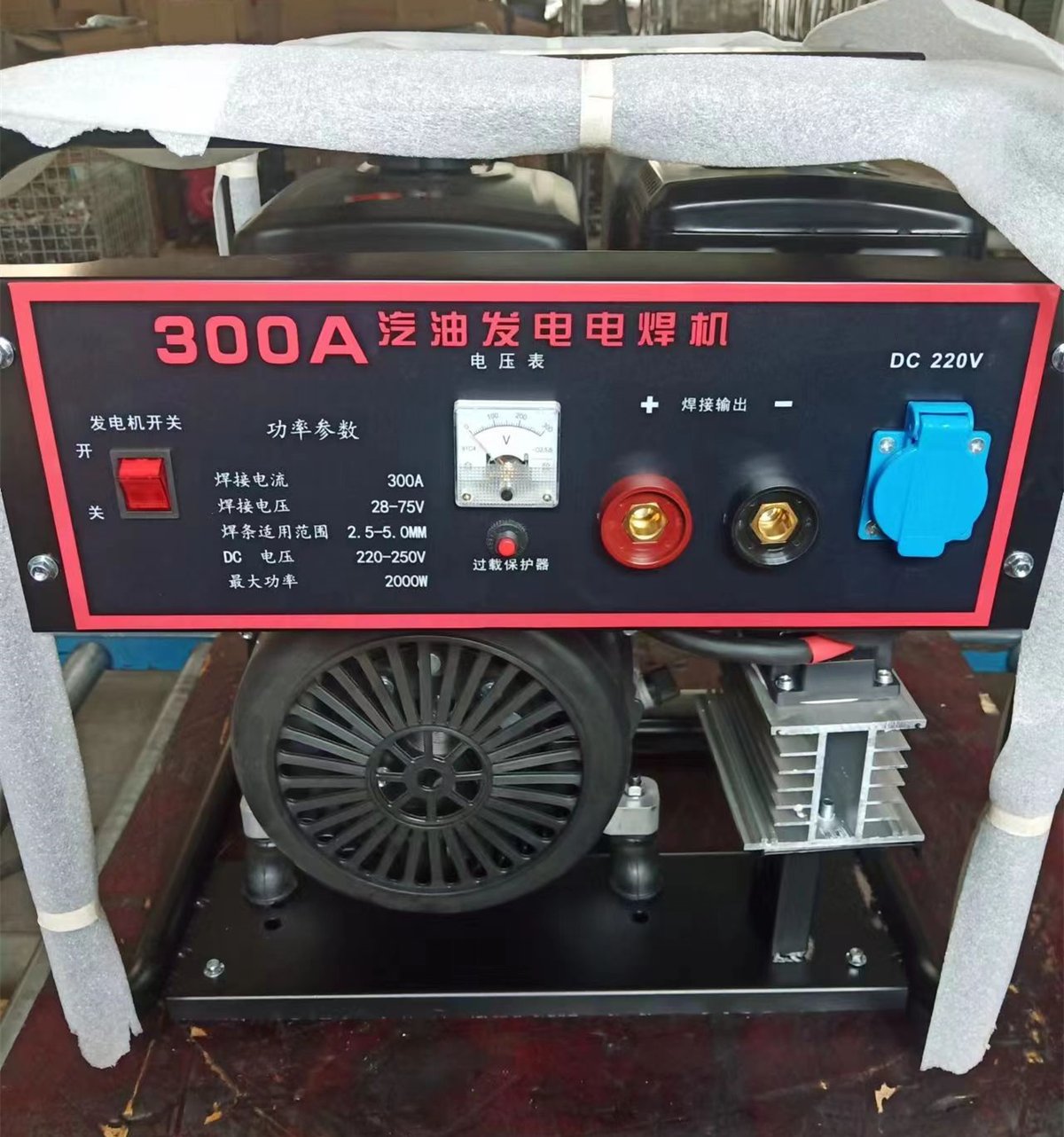
The hum of a reliable engine, the flash of a welding arc, the sheer capability of tackling tough jobs anywhere, anytime—that's the power of a welder generator. These robust machines are the unsung heroes driving progress across countless sectors, making "Applications & Industries for Welder Generators" a crucial topic for anyone involved in construction, manufacturing, or even critical emergency response. Far from a niche tool, these portable powerhouses are indispensable for their unique ability to combine welding and power generation, especially when grid power is a distant dream.
At a Glance: Welder Generators Driving Progress
- What they are: Versatile machines combining welding capabilities with a portable power source.
- Why they matter: Essential for remote work, increasing productivity, reducing downtime, and offering flexible power.
- Key Industries: Dominate construction, manufacturing, oil & gas, shipbuilding, and emergency services.
- Market Growth: The global market, valued at USD 2.4 billion in 2024, is projected to reach USD 4.1 billion by 2033, reflecting growing demand.
- Versatility: Beyond welding, they power tools, serve as backup during outages, and support recreational activities.
- Choosing wisely: Consider power output, duty cycle, fuel type, portability, and safety features for optimal performance.
The Unsung Workhorse: What Exactly is a Welder Generator?
Imagine a job site miles from the nearest power outlet, or a critical repair needed deep within a manufacturing plant during a blackout. This is precisely where a welder generator shines. It's a marvel of engineering, essentially merging two vital pieces of equipment—a power generator and a welding machine—into a single, portable unit. This unique combination makes it indispensable for tasks requiring both electricity and the ability to join metals, particularly in remote, hard-to-reach locations where traditional power sources are either unavailable or impractical.
These machines aren't just about convenience; they're about efficiency and self-sufficiency. They empower construction crews to build in uncharted territories, enable farmers to repair critical equipment in distant fields, and allow emergency responders to restore vital infrastructure in the wake of a disaster. Their mobility and flexibility are game-changers, offering a reliable power source where and when it's needed most, translating directly into reduced downtime and increased productivity. For a deeper dive into these remarkable machines, you can refer to Your complete welder generator guide.
Why Welder Generators Are Indispensable: Benefits Beyond the Spark
The true value of a welder generator extends far beyond simply striking an arc. These units deliver a compelling suite of benefits that make them a preferred choice across a spectrum of professional and even personal applications.
Firstly, reliable remote power stands out as their defining advantage. In an age where infrastructure projects stretch into vast, undeveloped areas and maintenance is often required in isolated spots, the ability to generate your own electricity for both welding and other tools is invaluable. This self-reliance means projects stay on schedule, even when conventional power grids are miles away.
Secondly, the combination of functions significantly reduces downtime and increases productivity. Instead of hauling a separate generator and a welding machine—or worse, waiting for grid access—crews can deploy a single unit. This streamlined approach minimizes setup time, speeds up repairs, and keeps work flowing seamlessly. The market's steady growth, projected to hit $4.1 billion by 2033, underscores this increasing demand for mobile and flexible welding solutions.
Furthermore, modern welder generators often boast impressive fuel efficiency. Compared to traditional, separate equipment, some units can reduce energy consumption by up to 30%. This not only translates to lower operating costs over time but also aligns with growing environmental consciousness. While the upfront investment can be higher than separate units, these long-term savings often make a strong case for their adoption.
Finally, their versatility is unmatched. A welder generator isn't just for welding. It's a multi-tool that can power lights, drills, saws, and other essential equipment, effectively transforming any location into a functional workspace.
Where the Sparks Fly: Core Applications & Industries
The global demand for portable power solutions, particularly in rapidly industrializing regions and for complex infrastructure projects, has positioned welder generators as critical assets. Let's explore the key industries where these machines are not just useful, but absolutely essential.
Construction Sites: Building the Future, On-Site
Walk onto any major construction site—be it a skyscraper going up, a new bridge spanning a river, or a commercial complex taking shape—and you're likely to see a welder generator in action. This sector is the dominant end-user for these machines, and for good reason. They are indispensable for:
- Structural Fabrication and Erection: Joining massive steel beams, fabricating custom parts, and assembling the skeleton of a building or bridge.
- Reinforcement and Repair: Welding rebar cages, repairing damaged structures, and performing on-the-fly modifications.
- Heavy Equipment Maintenance: Keeping bulldozers, excavators, and cranes operational with immediate repairs in the field.
The 300-500 amp power output range is most widely used here, balancing substantial power with necessary flexibility for medium to heavy-duty tasks. The ongoing global construction boom, particularly urbanization in emerging economies and vast infrastructure initiatives, is a primary driver of the market's robust growth.
Manufacturing & Fabrication: Precision and Power on the Production Line
From small workshops to large-scale industrial plants, manufacturing relies heavily on precise and efficient metal joining. Welder generators are integral to:
- Assembly Lines: Performing specialized welds on components, jigs, and fixtures.
- Machinery Maintenance and Repair: Quick fixes on production equipment to minimize costly downtime.
- Custom Fabrication: Creating bespoke metal parts, prototypes, and tooling.
The advent of inverter-based welder generators has been a crucial innovation for this sector. Their compact size, energy efficiency, and ability to deliver clean, stable power are ideal for sensitive electronics often found in modern manufacturing environments, enabling superior performance and arc control.
Oil & Gas: Powering Remote Operations
The oil and gas industry often operates in some of the world's most remote and challenging environments, from offshore platforms to desert pipelines. Welder generators are absolutely essential here for:
- Pipeline Construction and Maintenance: Welding vast networks of pipes that transport resources across continents, often in desolate areas.
- Drilling Rig Operations: Maintenance and repairs on complex drilling equipment, where continuous operation is paramount.
- Structural Repairs: Mending components on storage tanks, processing facilities, and other critical infrastructure.
Diesel welder generators are particularly favored in this industry due to their high power output, durability, and longer service life under continuous, heavy-duty operation in harsh conditions.
Shipbuilding: Crafting Giants of the Sea
The construction and maintenance of ships, from massive cargo vessels to intricate naval crafts, demand extensive and specialized welding. Welder generators play a vital role in:
- Hull Fabrication: Joining thick steel plates to form the ship's structure.
- Compartment Outfitting: Welding internal structures, bulkheads, and deck components.
- Onboard Repairs: Performing emergency or routine maintenance on ships in dock or at sea, where grid power is unavailable.
This industry often requires high-power, robust units capable of continuous operation, making diesel-powered options a common choice.
Automotive: From Production to Repair
The automotive sector utilizes welder generators throughout its lifecycle, from manufacturing to post-sale service:
- Vehicle Fabrication: Welding chassis components, body panels, and structural elements during assembly.
- Body Shops and Repair Centers: Performing collision repairs, frame straightening, and custom modifications.
- Field Service: Mobile mechanics and roadside assistance crews using them for on-site repairs.
Gasoline-powered units, known for their compact size and mobility, are often preferred for smaller-scale, light-duty tasks typical in many automotive repair scenarios.
Agriculture: Keeping Farms Running
Modern agriculture relies on a vast array of machinery, and breakdowns in the field can be costly. Welder generators are crucial for:
- Equipment Repair: Fixing broken plows, cultivators, tractors, and other farm implements directly where they malfunction.
- Fencing and Enclosures: Welding gates, repairing fence lines, and constructing animal enclosures.
- Barn and Outbuilding Maintenance: Repairs to metal structures, supports, and fixtures.
The versatility of a portable welder generator means farmers can quickly address issues without moving heavy machinery back to a workshop, saving time and preventing further losses.
Mining: Deep Down and Remote
Similar to oil and gas, mining operations are often located in remote areas, with heavy machinery working under extreme conditions. Welder generators are vital for:
- Heavy Equipment Maintenance: Repairing massive excavators, haul trucks, and drilling equipment.
- Structural Support: Welding new supports or repairing existing ones in mine shafts and processing facilities.
- On-site Fabrication: Creating custom parts or modifications needed for specific mining processes.
The demand for units that can withstand rugged environments and deliver continuous high power is paramount in this sector.
Emergency Response & Disaster Relief: Power When It Matters Most
When disaster strikes, infrastructure can crumble, and power grids fail. Welder generators become indispensable for:
- Rapid Infrastructure Repair: Fixing damaged bridges, utility lines, and structural elements.
- Powering Essential Tools: Providing electricity for lights, pumps, communication equipment, and other life-saving tools.
- Temporary Shelter Construction: Assisting in the quick fabrication of temporary structures for aid.
Their ability to provide instant power and welding capability in chaotic, off-grid scenarios makes them a critical asset for first responders and relief organizations.
Infrastructure Development: Roads, Bridges, and Beyond
Beyond specific construction projects, broad infrastructure development — encompassing roads, bridges, railways, and utility networks — often involves extensive work in areas lacking power access. Welder generators enable:
- Remote Bridge Repair: Essential for maintaining structural integrity of vital transport links.
- Utility Line Construction: Welding new poles, conduit, or other components for power and communication networks.
- Highway Maintenance: Patching, reinforcing, and repairing roadside structures.
These machines are the backbone of keeping a nation's vital arteries healthy and functional.
Beyond Welding: The Multitasking Powerhouse
While their primary function is welding, the integrated generator means these units are incredibly versatile power sources, extending their utility significantly:
- Powering Other Tools: Need to cut, grind, drill, or illuminate a workspace? A welder generator can power a wide array of electric tools and lighting.
- Backup Power During Outages: For smaller commercial operations or even residential use, they can keep critical systems running during unexpected power failures.
- Recreational Activities: Campers, RV enthusiasts, and outdoor event organizers can use them to power appliances, lights, and entertainment systems far from the grid.
- Educational Settings: Technical schools and vocational training centers use them for hands-on learning in metal fabrication and electrical applications.
- Aerospace and Energy Sectors: Specialized applications requiring precise welding or mobile power for maintenance of complex systems.
This multi-faceted capability makes them a smart investment for anyone needing both welding and reliable auxiliary power.
Navigating the Market: Choosing the Right Welder Generator
Selecting the perfect welder generator isn't a one-size-fits-all decision. It requires a careful evaluation of your specific needs against a range of features. The global market offers diverse options, catering to everything from light-duty home projects to heavy industrial applications.
Here's what to consider:
- Power Output (watts & amps): This is paramount. Higher wattage and amperage mean the generator can handle more powerful equipment and weld thicker materials. Units below 300 amps are ideal for light-duty tasks and residential users, while the 300-500 amp range is the sweet spot for most commercial and industrial tasks. Specialized, high-power operations often demand units above 500 amps.
- Duty Cycle: This tells you how long the machine can weld at a given power output within a 10-minute period before needing to cool down. A 60% duty cycle at 200 amps means it can weld for 6 minutes continuously at 200 amps before a 4-minute cool-down.
- Welding Process Type: Are you primarily stick welding (SMAW), MIG welding (GMAW), or TIG welding (GTAW)? Ensure the unit supports your preferred process. Many modern units are multi-process capable.
- Fuel Type and Efficiency:
- Gasoline-powered units are common for their relatively low cost and high power output, favored for small-scale and light-duty tasks.
- Diesel-powered generators offer superior fuel efficiency, longer engine life, and continuous operation, making them a staple in industrial and commercial settings. They are typically more expensive upfront.
- Inverter-based models are increasingly popular for their clean power, compact size, and enhanced energy efficiency, making them suitable for sensitive electronics and high-quality welds.
- "Others" like hydraulic or battery-powered units offer low noise and zero emissions, positioning them for rapid expansion as demand for cleaner solutions grows.
- Portability: If you're constantly moving the unit, look for lightweight, compact designs with sturdy handles and robust wheels.
- Noise Level and Vibration: For prolonged use, especially in residential or sensitive areas, lower noise and vibration levels contribute significantly to operator comfort and safety.
- Start-up and Control System: Electric start and digital controls reduce user error and can boost productivity, offering a more user-friendly experience.
- Safety Features: Critical for protecting both the operator and the equipment. Look for overload protection, thermal shutdown, ground fault circuit interrupters (GFCI), and low oil shutdown. UL certification is a strong indicator of safety compliance.
- Price: Ranges from hundreds to many thousands. Higher prices generally reflect greater power, advanced features, and superior durability.
- Warranty and Customer Support: A solid warranty and reliable customer support are invaluable for peace of mind and protecting your investment.
- Manufacturer Reputation: Brands like Lincoln Electric, Miller Electric, ESAB, Denyo, and Hobart Brothers have built reputations for quality, reliability, and excellent support.
The Global Pulse: Market Trends & Regional Dynamics
The welder generator market is vibrant and growing, demonstrating its essential role in global development. Valued at USD 2.4 billion in 2024, it's projected to grow at a Compound Annual Growth Rate (CAGR) of 5.6% from 2025 to 2033, reaching an estimated USD 4.1 billion by 2033. This growth isn't accidental; it's fueled by several powerful drivers:
- Global Construction Activities: Rapid urbanization in emerging economies and massive infrastructure projects worldwide continue to demand portable welding and power solutions.
- Manufacturing and Shipbuilding: Industries constantly striving for greater productivity and operational efficiency leverage these units for quick, on-site repairs and fabrication.
- Oil and Gas Industry: Operations in remote, often harsh, environments depend on welder generators for pipeline construction, maintenance, and repairs.
- Technological Advancements: Innovation is key, with newer models offering enhanced fuel efficiency, lower emissions, reduced noise, smart monitoring systems, and sophisticated digital controls.
- Rental Services Expansion: The growth of equipment rental services makes welder generators more accessible to small and medium enterprises (SMEs), allowing them to utilize advanced equipment without the high upfront cost of ownership.
- Inverter Welding Machines: The increasing adoption of inverter technology is a crucial innovation. These machines provide clean, stable power in a compact, energy-efficient package, revolutionizing welding performance.
Regional Dominance: A Global Snapshot
The market's growth isn't evenly distributed, with certain regions leading the charge:
- Asia Pacific: This region dominates the global market, holding approximately 41% (USD 984 million) of the share in 2024. Driven by rapid industrialization, massive infrastructure investments, and booming manufacturing sectors in countries like China and India, the Asia Pacific market is projected to grow at a robust CAGR of 6.2% through 2033.
- North America: A significant market at approximately USD 624 million, North America benefits from technological innovation, infrastructure modernization projects, and a strong industrial base.
- Europe: Holding a substantial share at about USD 456 million, Europe's market is supported by its well-established manufacturing, shipbuilding, and automotive industries.
- Middle East & Africa and Latin America: These are emerging markets, currently valued at USD 192 million and USD 144 million, respectively, with significant growth potential as industrialization and infrastructure development accelerate.
The overall trend highlights a clear global recognition of welder generators as essential tools for progress.
Keeping Your Powerhouse Healthy: Essential Maintenance Tips
Just like any high-performance machinery, a welder generator thrives on regular care. Proactive maintenance not only extends its lifespan but also ensures safe and reliable operation. Neglecting it can lead to costly repairs and unexpected downtime.
Here are key steps to keep your unit in top condition:
- Regularly Check and Change Oil and Filters: This is perhaps the most crucial step. Engine oil lubricates moving parts and dissipates heat. Dirty oil can lead to premature wear. Follow the manufacturer's recommended intervals for oil and oil filter changes.
- Clean the Generator and Its Components: Dust, dirt, and debris can clog cooling fins and air intakes, leading to overheating. Regularly wipe down the exterior and use compressed air to clear vents.
- Check and Replace the Air Filter and Spark Plug: A clean air filter ensures optimal combustion and fuel efficiency. A healthy spark plug is essential for consistent ignition. Replace them according to your owner's manual.
- Inspect the Fuel System: Check for any signs of fuel leaks, clogged fuel lines, or a dirty fuel filter. Stale fuel can cause significant problems, especially in gasoline units. Always use fresh, clean fuel and consider a fuel stabilizer if storing the generator for extended periods.
- Check the Electrical System: Periodically inspect cables, terminals, and connections for corrosion, fraying, or looseness. Faulty electrical connections can be a fire hazard and impair performance.
- Follow Manufacturer's Instructions: Your owner's manual is your best friend. It contains specific maintenance schedules, repair guidelines, and recommends genuine parts for your model. Adhering to these instructions is critical for warranty validity and optimal performance.
- Consult a Qualified Technician: If you encounter persistent problems or require complex repairs, don't hesitate to consult the manufacturer's documentation or a qualified service technician. Attempting repairs beyond your skill level can be dangerous and cause further damage.
By integrating these simple yet vital maintenance practices, you ensure your welder generator remains a dependable tool for years to come.
Looking Ahead: Opportunities and Challenges Shaping the Future
The journey for welder generators is far from over. While a promising future lies ahead, shaped by innovation and expanding demand, there are also hurdles to navigate.
Opportunities on the Horizon:
- Industrialization in Emerging Economies: As developing nations continue to urbanize and build out their infrastructure, the demand for portable, self-sufficient power and welding solutions will soar.
- Renewable Energy Projects: The construction and maintenance of solar farms, wind turbines, and other green energy installations often occur in remote locations, making welder generators ideal tools.
- Advanced Technologies: The integration of IoT (Internet of Things) for remote monitoring, advanced digital controls for precision, and more sophisticated diagnostic capabilities will enhance efficiency and user experience.
- Expansion of Rental Services: For businesses or individuals who don't need a welder generator constantly, rental services offer an accessible and cost-effective solution, broadening market reach.
Challenges to Overcome:
- Volatility in Raw Material and Fuel Prices: Fluctuations in steel, copper, and especially fossil fuel prices can impact manufacturing costs and operational expenses, potentially affecting market stability.
- Increased Adoption of Automated Welding Systems/Robots: As automation becomes more prevalent in manufacturing, certain repetitive welding tasks might shift away from manual operation, though human-operated portable units will remain crucial for custom work and field repairs.
- Stringent Environmental Regulations: Growing pressure for lower emissions and quieter operation will push manufacturers to invest in more sustainable designs, potentially increasing initial costs for consumers.
Despite these challenges, the inherent benefits of mobility, versatility, and self-sufficiency ensure that welder generators will continue to evolve and remain a cornerstone of progress across diverse industries.
Your Next Step: Empowering Your Projects with Reliable Power
From the foundational beams of a new high-rise to the critical repairs on a remote pipeline, welder generators are more than just tools; they are enablers of progress. They provide the freedom to work, repair, and build anywhere, transforming logistical challenges into achievable tasks.
Understanding the "Applications & Industries for Welder Generators" isn't just academic; it's practical knowledge that empowers you to make informed decisions for your next project. Whether you're an industrial contractor facing a complex build, a farmer needing a quick fix, or an emergency responder preparing for the unexpected, selecting the right welder generator is about investing in efficiency, reliability, and ultimately, success.
Take the time to assess your specific needs, weigh the key features, and consider the long-term benefits of these powerful machines. By doing so, you'll be well-equipped to choose a unit that not only meets today's demands but also drives your future endeavors forward, spark by spark.